Finding the right student accommodation is a pivotal step toward your university experience. For many, this is the first time living away from home, potentially in a completely new city or country. While the process can be exciting, it’s equally important to approach it with caution to ensure your living environment is safe, comfortable, and conducive to your studies.
This comprehensive guide outlines what to look for in student accommodation, specific factors to consider, and questions to ask before signing any agreements. By the end of this post, you’ll have a practical student accommodation checklist to guide your search.
Why Choosing the Right Student Accommodation Matters
Your living environment significantly affects both your academic performance and overall well-being. Poor housing conditions or a lack of suitability can lead to stress, health issues, and even financial challenges. Whether you’re staying in university halls or renting private housing, finding accommodations that meet your needs is vital.
This guide is tailor-made for university students (local or international), parents helping with the search process, and anyone navigating the student housing market in the UK. Be prepared to make an informed decision to avoid unnecessary regrets later.
Key Features to Look for in Student Accommodation
1. Location and Accessibility
- Proximity to Campus: Is the accommodation close to your university? Consider the time and cost of your daily commute.
- Access to Public Transport: Ensure there are reliable transport links such as buses, trains, or trams nearby.
- Nearby Amenities: Look for grocery stores, pharmacies, and other vital services within walking distance.
- Tip: Use mapping tools like Google Maps to calculate the distance between the accommodation and frequently visited spots like your campus or part-time job.
2. Safety and Security Measures
- Secure Entry Systems: Check for features such as CCTV, key card access, or intercom systems.
- Neighborhood Safety Ratings: Research online or ask locals about the safety of the neighborhood.
- Fire Safety Standards: Ensure the property has smoke alarms, fire extinguishers, and evacuation routes.
Tip: Some accommodation providers offer 24/7 on-site security staff for added peace of mind.
3. Condition and Cleanliness of the Property
- Inspection for Damp or Mold: Inspect every room, especially around windows, ceilings, and bathrooms, to ensure there are no signs of dampness or mold.
- Functionality of Amenities: Test the heating system, water pressure, and kitchen appliances to ensure they’re in good working condition.
- Overall Cleanliness: Observe the cleanliness of common areas like the kitchen and bathrooms (if shared).
4. Quality of Furnishings and Facilities
- Basic Furniture: Confirm that essentials such as a bed, wardrobe, and study desk are provided.
- Laundry Facilities: Is there an in-unit washing machine, or is laundry available nearby within the building/surroundings?
- Common Areas: If applicable, check the quality and size of any communal spaces like lounges or study rooms.
5. Costs and Hidden Fees
- Rent Costs: Compare rent prices in the area to ensure the cost is reasonable.
- Utility Bills: Some student accommodation includes utilities such as water, electricity, and internet in the rent. Confirm what is and isn’t covered.
- Deposit and Additional Fees: Clarify the required deposit and whether there are other fees (e.g., admin fees, maintenance charges).
Tip: Review the cancellation policy, especially if uncertain about travel dates or circumstances.
6. Social Atmosphere
- Roommates vs. Solo Living: Decide if you’re comfortable living with others or prefer a private room or studio.
- Cultural Fit: Look at reviews or photos to gauge if the atmosphere aligns with your preferences (e.g., quieter spaces for studying vs. vibrant areas with social events).
Tip: University-provided accommodations generally have a good mix of social and quiet spaces, making them a safer choice for first-year students.
Your Student Accommodation Inspection Checklist
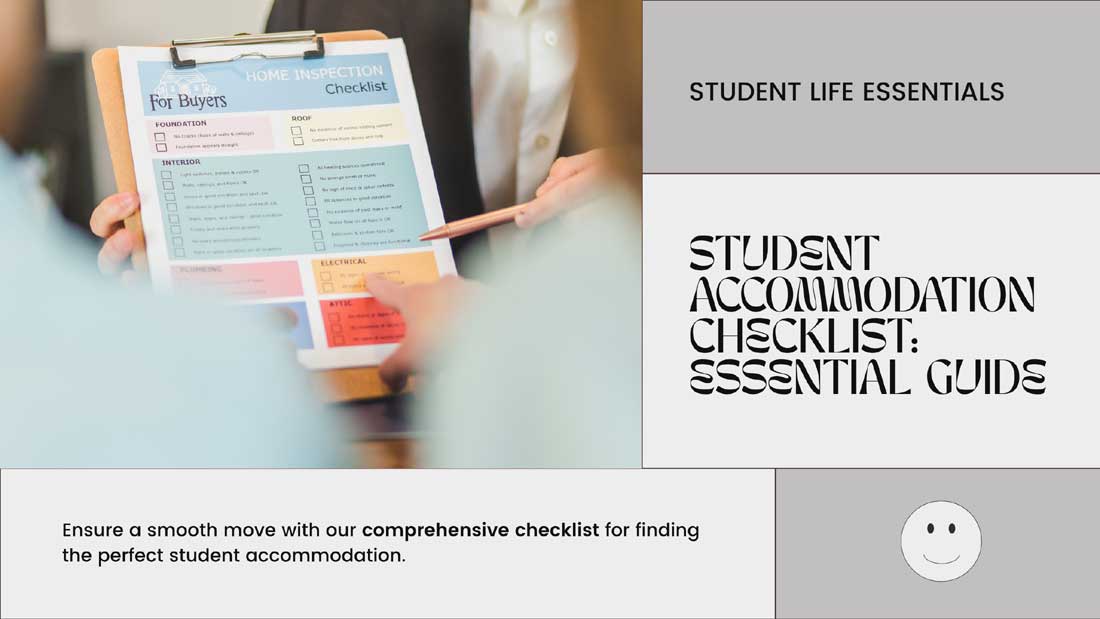
Before signing a student accommodation contract, conduct a physical or virtual inspection. Use this checklist as your guide:
- Structure and Condition:
- No visible cracks, leaks, or mold.
- Functioning locks on all windows and doors.
- Utilities:
- Heating, water pressure, and electricity functioning.
- High-speed internet available.
- Safety:
- Emergency exits clearly marked.
- Functioning fire alarms and extinguishers.
- Amenities and Furniture:
- Bed, desk, and chair provided (in good condition).
- Fully equipped kitchen (e.g., stove, fridge, microwave).
- Paperwork:
- Clear contract terms.
- Deposit protection scheme used.
Questions to Ask Before Renting Student Accommodation
- Is the accommodation close to any emergency services (hospital, police station)?
- What are the rules around guests staying overnight?
- Are there any additional fees for maintenance or cleaning services?
- Who is responsible for repairs, and how quickly are they resolved?
- What is the process of renewing an annual lease or contract?
Common Pitfalls and How to Avoid Them
Overspending
Many students make the mistake of overestimating budgets. Always calculate the full cost, including commuting, to avoid surprises later.
Ignoring Reviews
Check for online reviews from past tenants to uncover hidden issues. University forums or accommodations review sites can offer authentic insights.
Rushing the Decision
If under pressure, you may sign a contract without understanding it fully. Take your time and involve trusted individuals, such as parents or mentors, to review the agreement.
Building Your Community
While finding housing is essential, it’s equally important to build a connection with the people sharing the space. A collaborative living environment can significantly enhance your university experience.
Some accommodations offer events and activities to help you bond with others. Consider taking advantage of these opportunities to make new connections.
Making the Right Choice
Choosing student accommodation is a significant part of adapting to university life. By following this guide, utilizing the student accommodation checklist, and asking the right questions, you position yourself for a smoother transition into your new housing.
If you’re looking for more tailored advice, explore additional resources, such as university housing offices or student community groups. You can also speak directly with a housing advisor for region-specific guidance.