
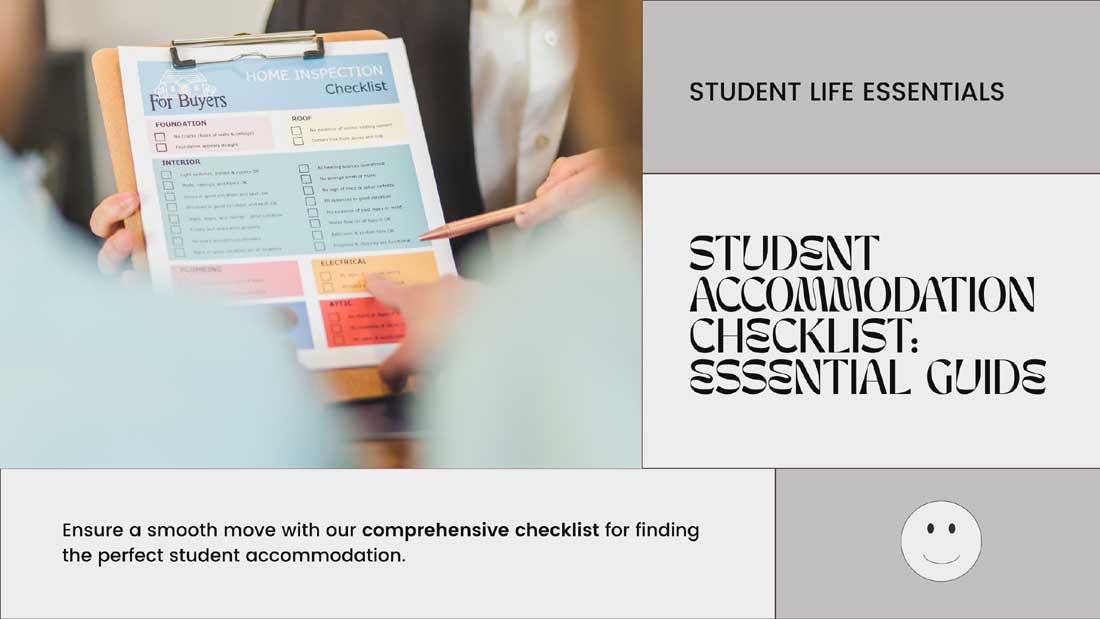
Before you sign for student accommodation in England, check three things in writing: what the deposit is and how it is protected, what fees you will pay, and what the rent covers. The checklist below separates what the law says in England from practical checks that apply anywhere.
Legal details come from GOV.UK’s tenancy deposit protection page and its Tenant Fees Act 2019 guidance for tenants, checked on 30 October 2026. They apply to England. Rules in Scotland, Wales and Northern Ireland differ, and the GOV.UK pages do not say whether university halls or student licences are covered, so ask your provider which rules apply to your contract.
Money: deposits and fees (England)
- Deposit cap: up to five weeks’ rent if annual rent is below £50,000, and up to six weeks’ if it is between £50,000 and £100,000.
- Holding deposit: a maximum of one week’s rent. The landlord can hold it for 15 days unless you agree a different period in writing.
- Deposit protection: the landlord or agent must put the deposit in a government-approved scheme within 30 days of receiving it. In England and Wales the schemes are the Deposit Protection Service, MyDeposits and the Tenancy Deposit Scheme.
- Getting it back: the landlord must return the deposit within 10 days of you both agreeing how much you will get back.
- Rent in advance: before the tenancy starts, a landlord can ask for a maximum of one month’s rent.
- Not allowed: requiring you to take out a loan, buy insurance or sign a service contract.
Inspecting the property
These are practical suggestions rather than legal requirements. If you cannot visit, ask for a live video tour of the actual room.
- Condition: look for damp or mould around windows, ceilings and bathrooms, and check that locks on windows and doors work.
- Services: test the heating, hot water, water pressure and internet speed.
- Safety: check for working smoke alarms and clear exit routes.
- Furniture and kitchen: confirm in writing what is provided, such as a bed, desk, wardrobe, cooker and fridge.
- Location: time the journey to campus and work out the transport cost.
Questions to ask before you sign
- What does the rent include: electricity, water, gas, internet?
- How long is the contract, and what happens if you need to leave early?
- Who is responsible for repairs, and how do you report them?
- What are the rules on guests?
- Which deposit scheme holds your deposit, and when will you get the certificate?
- Are you jointly liable if a housemate stops paying? Ask this for shared tenancies.
Pitfalls to avoid
- Underestimating the full cost. Add rent, bills, transport and any fees before you compare options.
- Paying before you have a contract. Never send a deposit or rent without a written agreement and a viewing, in person or by live video.
- Rushing. Read the whole agreement, and ask your university’s accommodation or students’ union advice service to look it over if you are unsure.
FAQs about student accommodation checklists
How much deposit can a landlord charge in England?
Up to five weeks’ rent if annual rent is under £50,000, under the Tenant Fees Act, for tenancies it covers.
When must my deposit be protected?
Within 30 days of the landlord or agent receiving it, in a government-approved scheme.
Do these rules cover university halls?
The GOV.UK pages I checked do not say. Ask your provider which rules apply to your contract.
Sources
All checked 30 October 2026.