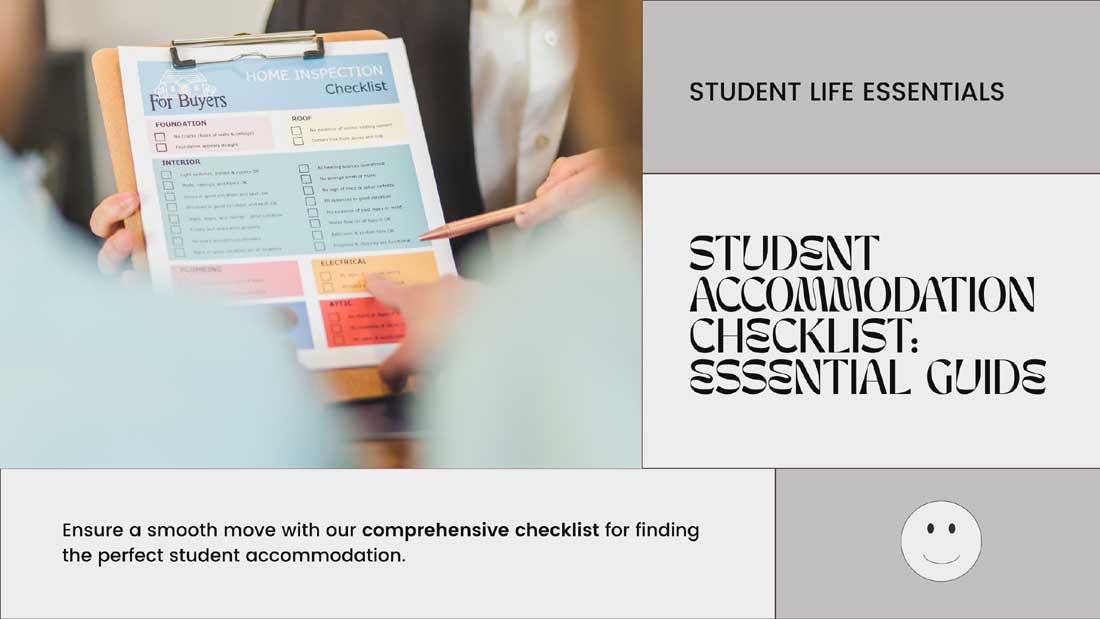
The most common student accommodation mistakes are searching too late, signing a contract you have not read, and budgeting for rent but not the extras. Each one is avoidable if you check the costs, the contract and the property before you commit.
The tenancy-rule points below come from GOV.UK guidance for England, checked on 30 October 2026. Rules differ in Scotland, Wales and Northern Ireland and in other countries, and the GOV.UK pages do not say whether student halls or licences are covered, so confirm your own situation with your university’s accommodation team. The other tips are practical advice rather than researched statistics.
1. Starting the search too late
Popular buildings near campus fill up, and university halls often have application deadlines. Check your university’s accommodation page as soon as you have an offer, and note every deadline in one place.
2. Budgeting for rent only
Work out the full monthly cost: rent, bills, internet, food, transport and the occasional emergency. Ask whether bills are included, and check what is charged on top of rent. MoneyHelper puts average weekly room rent at £222 in London and £148 nationally, which shows how much location matters.
3. Ignoring the commute
A cheaper room far from campus can cost you time and travel fares. Test the journey at the time you would travel for lectures, and check the last bus or train home.
4. Booking without seeing the place
Photos can hide damp, noise and poor maintenance. Visit if you can, or ask for a live video tour. Look for signs of damp, check the windows and heating, and ask current tenants what living there is like.
5. Skipping reviews
Read recent reviews from several places, including your students’ union or university forums, and look for patterns such as slow repairs or deposit disputes rather than one-off comments. Treat reviews as a guide, not proof.
6. Signing a contract you have not understood
Read the whole agreement before you sign, including the length of the contract, what happens if you leave early, and who is responsible for repairs. Many universities and students’ unions will check a contract for free. Also ask whether you are signing jointly with housemates, since that can make you responsible for the whole rent.
7. Not understanding deposits and fees
For private rentals in England, GOV.UK says a landlord can take a holding deposit of no more than one week’s rent. It also says the tenancy deposit is capped at 5 weeks’ rent where the annual rent is under £50,000, and 6 weeks’ where it is £50,000 to £100,000. The deposit should be protected in an approved scheme within 30 days and returned within 10 days of the agreement being reached on what is owed. Ask which of these rules applies to your housing, because the GOV.UK pages do not say whether student licences or halls are covered.
8. Overlooking safety
Check that the entrance is secure, the locks work and the fire alarms are in place. Walk the area in the evening and look at local crime information on police.uk if you are in England or Wales. The London Fire Brigade also advises keeping escape routes clear and never leaving cooking unattended.
9. Ignoring housemate compatibility
Before you sign with friends, talk about noise, cleaning, guests and how you will split bills. The Falmouth and Exeter Students’ Union living-together guide is a useful starting point for those conversations.
10. Not insuring your belongings
Laptops, phones and bikes are expensive to replace. Ask whether your parents’ home policy covers items away from home, compare student contents policies for what they exclude, and keep photos and receipts for valuable items.
FAQs about avoiding accommodation mistakes
When should I start looking for student accommodation?
As soon as you have an offer, or earlier if your university opens its accommodation applications first. Deadlines differ by university and provider, so check each one.
How much deposit can a landlord ask for in England?
GOV.UK says 5 weeks’ rent where annual rent is under £50,000, and 6 weeks’ where it is £50,000 to £100,000. Confirm whether this applies to your type of housing.
Should I get contents insurance as a student?
It is worth checking, especially if you own a laptop or bike. First see whether a family home policy already covers your belongings away from home.
Sources
- GOV.UK: tenancy deposits
- MoneyHelper
- London Fire Brigade: fire safety tips for freshers (September 2026)
All checked 30 October 2026.